Thursday, October 11, 2018

Audience

Component 1

Section A:
Media Language and representation
  • Hermeneutic Codes
  • Analyse of what media products mean
  • Mise-en-sene
  • Colour
  • Genre
  • Shot, mid, long, wide
  • Costume
  • Representation of groups
Examples
  1.  Tide Ad
  2.  Kiss of the Vampire
  3.  Water-aid Ad

Section B:
Audience


Examples

  1.  Tide Ad
  2.  Water-aid Ad
--------------------------------------------------------------------------------------------------------------------------

AUDIENCE

Every Media product is created to match a particular audience's expectations
It is assumed by many that Media products influence their audience, Media amplification
Audience are easy for manipulation

Target (Primary) Audience: A specific group of people that a media product is aimed at.

Secondary Audience: The 2nd audience that is targeted in mind by the producer

Decoding-Encoding model
  • Targeting
select as an object of attention or attack.
  • Attracting
cause to come to a place or participate in a venture by offering something of interest or advantage.
  • Reaching
Is to extend to a different audience
  • Addressing
speak to (a person or an assembly). Mode of Address
  • Constructing
form (an idea or theory) by bringing together various conceptual elements.


------------------------------------------------------------------------------------------------------------------------------------------------------
Image result for The last of us cover

Natural and murky lighting has connotations towards an apocalypse, we can tell this due to intertextuality.
Low-key lighting creates a hermeneutic code, suggesting mystery

Looking back suggests they're in danger, the dutch tilt in the camera all creates mystery, hermeneutic

The use of the sans-serif font covers a third of the cover

The second character appeals to 40+ year olds

The girl appeals as a daughter figure

Weapons are atypical, girl is atypical

Intertextuality: The Road, I am Legend, The walking Dead, Zombieland

The verisimilitude is that we see a young woman in the apocalypse, we don't usually see this
non-stereotypical representation of women

Genre: Apocalypse, adventure, action, horror, hints of western


Related image

Wednesday, October 10, 2018

Photoshop


This was my first shot at using photoshop ever, not the best ad but an alright try.


Learning Conversation


  • What do you think has gone particularly well so far this year? What are your strengths?
  1.  Genres
  2. Stereotypes
  3.  Cinematography
  4.  Narrative Equilibrium
  • What is stopping you from achieving your goals? What threats might you face, (for example not enough time, lack of organisation, pressure from other subjects...)
  1.  For one it'll be the remembrance of many key words and people 
  2. how to answer exam questions the right way
  3. Times, lack of time, etc
  • Identify 3 specific targets for yourself for the rest of this year. They can be both academic and organisational goals.
  1. To organise myself much better e.g times to revise etc
  2. To maintain keeping up with hwk and not falling behind
  3. To achieve the grades to get to Uni
  • What grade do you want to achieve in media studies?
Hopefully an A but since right now that may be unlikely, atleast a C
  • Do you have any suggestions about the course?

Monday, October 8, 2018

Narrative

Narrative is the way in which a story is told
Narrative is not just the story but also the mise-en-scene

The way narratives are told help us understand the ideology of the producer

7 types of story

  • Rebirth
  • The Quest
  • Voyage & Return
  • Tragedy
  • Comedy
  • Rag to Riches
--------------------------------------------------------------------------------------------------------------------------

Tzvetan Todorov - Narratology 


Theory of Narrative Equilibrium:
Is the state of balance


  1. Establishment of equilibrium
  2. Disequilibrium (The Liminal period)
    1. The period at which everything goes bad, a lack of stability
  3. Partial restoration of equilibrium
An advantage to this theory is that it:
  • gives order to things
  •  it keeps audiences compelled
  •  easy to apply


A disadvantage is that:

  • Can be more than one disruption to equilibrium
  • May not always go in the set order e.g plot twists
  • We enjoy seeing the disequilibrium
  • The audience is always told that everything is going to be okay
--------------------------------------------------------------------------------------------------------------------------

The ideology is that audience are usually negatively bias, therefore enjoying characters getting tortured etc.

Escapism: audience do this by watching movies to get out of our foul lives 


Wednesday, October 3, 2018

Genre


Genre: a type of media product, governed by implicit rules

Hybrid genre: a combination of different genres

Sub-genre: is a genre within a genre

Generic Paradigms: aka Genre convention The building blocks of a genre, mise-en-scene, sound etc

Iconography: Stuff that makes up a genre

Verisimilitude: Every text has it's own set of rules and situations. However there are many that can break this, depending on the genre.

Verisimilitude = Reality/Realism

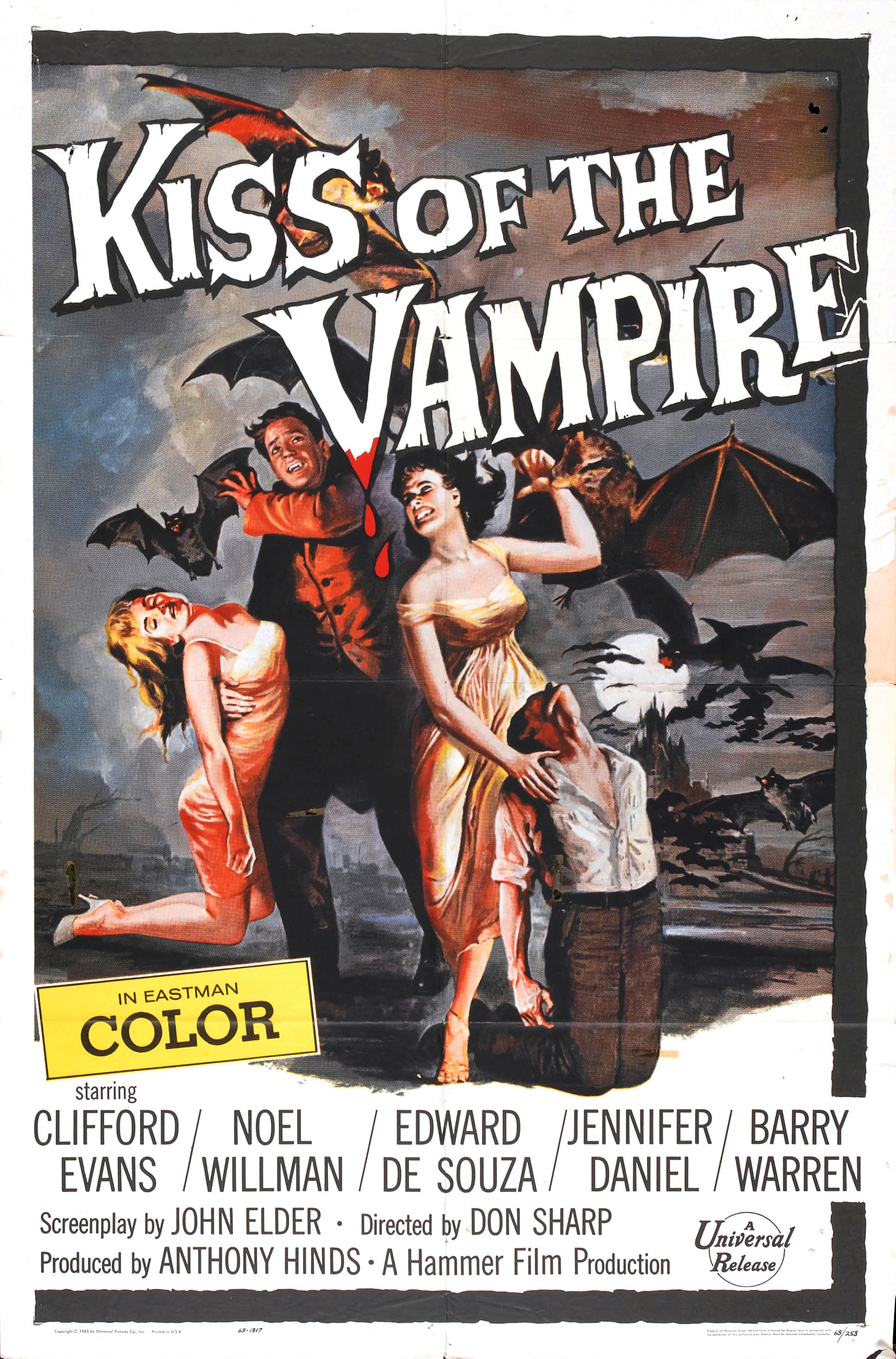
Image result for kiss the vampireIntertextuality: The shaping of a media product's meaning through referencing another product another product.

So when we watch a horror movie, we know the consequences of going into that dark room

Genres from this poster(1963) --------->


  • Horror
  • Tragedy
  • Romance
  • Serif font
  • Thriller
  • Design is that of arty and is painted suggesting it's a classical
  • Font is rooked and wonky and sharp
  • Is a hybrid genre
  • Generic paradigms include: bats, castle, the moon, the dead woman and of course the vampire
  • Low-key natural lighting is sp00ky, connotes to a feeling of suspense, a hermeneutic code
  • Mise en scene of red and black connotes to death
  • Font looks like wood and the V looks like a stake- iconography
  • The eerie and bleak and stereotypical setting
  • A typical romance narrative with a gothic twist
  • Stereotypical setting of a vampire film, gothic castle
  • Contains a wide range of paradigms


Giallo- Subgenre of gothic horror combined with detective
Danmaku shooter- subgenre of 2D games with a lot of bullets
Visual novel- game completely based on text and decisions
vaporwave- taking samples of 80s 90s music and slowing it down
Grindcore- subgenre of rock, fast hardcore punk with heavy metal


  1. Paradigms
  2. Repertoire of elements
  3. Iconography
  4. Generic conventions
  5. Conventional elements
  6. Conventions
  7. Paradigmatic features

Star Trek: The next generation
The setting is in space
The android Data
Mise en scene of futuristic technology, space-ships
Binary opposition- Humans & Aliens
Futuristic costumes


Steve Neale- Genre Theory

Repetition & difference
Believes that genre is essentially instances of 'repetition of differences'
He suggested that texts need to conform to some generic Paradigms to be identified

The Simpsons

The intertextuality of The Simpsons is to make the targeted audience to laugh
Double mode of address was used. Adults will get the reference, whilst children will just find it funny.


Tuesday, October 2, 2018

First year textual analysis mini mock


How does media language create meaning in this poster?

  • Binary oppositions

    The juxtaposition between the glow around wonder woman and the surrounding blue

    The superior woman and the average man

    The gun and sword

    Male and Female

    Blue and gold

    Ancient and modern

    Representation
     1.  Who/what is being represented?

    Wonder woman poster 2017 showing wonder woman as a powerful and independent being

     The sword is associated with being a strong, manly person, this suggests that Wonder woman is different to how people of the modern era would perceive woman with dark hair and brown-tinted skin are like. We do associate dark haired women to being nerdy, geeky, lonely etc. And the stereotype here is sort of used by how she is the only woman in the poster, but is also contrasted by how tuff she is viewed as. The position she is in, in the M/S seems to be that she is leading a charge against the enemy, her stance seems to be her running and about to strike someone down. The stereotypes are on it's head as the woman seems to be the warrior instead of the weak/always wearing dresses, being emotional and wearing jewellery all the time. Instead she wears Ancient Greek armour (which is associated with being manly), has a massive sword(connotations to being fierce and mighty) and how she contrasts with the scenery.

         The mise-es-scene in this poster is that she is positioned in the middle of the poster, meaning that she is the most important. Additionally her bright metallic reds, blues and glowing golds is a binary opposition the the cloudy blueness of the scene. We associate gold with being wealthy, powerful, hope, symbolic to being religious. Here Wonder woman is seen as the powerful being
Additionally glow above wonder woman's head could perhaps shows that she is smart and has the brains, which links back to how we associate dark hair girls with being nerdy. 

Chris Pine is represented as being the weaker of the two in the poster, he is positioned in the top-left corner of the poster, which makes him to be less important. And his rugged, dirty clothing suggests that he is of poor quality. This representation of men in this poster seems to be that they are messy, dirty, not as important as they are seen in history stereotypically. The entire poster puts stereotypes on it's head by flipping over that the woman is far more superior than the man. The producer's ideology in this case believes that woman were always far more important that they should of been, this is further highlighted by the ancient greek armour, perhaps showing that women were always more superior than men.

However we do see that Chris Pine has a gun and is dressed as a soldier, showing the stereotype that men are always soldiers whilst woman stay at home. So the poster does follow the stereotype that men are always war-players and that they are obsessed with weapons.

What is the societal impact of this message on the group being represented?

That woman are really good at being independent and are tuff beings...

Monday, October 1, 2018

Charity & Identity & Water-aid

David Gauntlet: Theories of Identity

Gauntlet believes that despite many negative perceptions of the media, audiences are capable of constructing their own identities through what they see on television.

Additionally, he writes there are now many more representation of gender than the traditional 'gender binary'

Stereotypes of men

  • Strong, buff,  manly
  • wear suits
  • do all the work
  • drive, like cars
  • leaders of countries
  • drunk
  • more comedic
  • more dangerous
  • brave

Stereotypes of women
  • always wear dresses
  • belong in the kitchen
  • smart, clever
  • women are weaker
  • always wear makeup
  • very emotional
  • elegant
  • jewellery

Representation is a construction of reality

The producer constructs these representations

They do this to encode their ideology

Manipulate - negative connotations

Charity advert

Purpose of a charity advert is that they ask for money for people in need of that money for devices that can assist them

They work by making the audience feel guilty by making it very emotional

The mode of address is quite sad and depressing, their very blunt and only want one thing from the audience

Use of low-key lighting has connotations towards darkness and death
Use of extreme close-ups shows that the audience is positioned in the room with the children, making the audience uncomfortable.
Use of sound effects like child crying makes us feel sorry
Sad and nostalgic 
the use of slow fades symbolises that the child cruelty is still continuing
The word "please" show the desperation for money
Charity adverts get played during mid-day, which means that it could be aimed towards students, unemployed, working-class and elders.
There is direct address.


'If you do not donate, you are a terrible person'


Water-aid- Deliberately went away from the stereotypical archetype
Juxtaposing the representation of Africa adverts

Is an established charity from the early 80s and is a campaign for clean water, sanitation for poor nations in Africa, Asia etc.

Shots include: Mid-shot, Close up, long shot-ish
The scene is slowly establishing the location, it starts off with her walking alone until she slowly has people joining her, perhaps suggesting she's not alone

Low C/U tracking shot of Claudia shoes establishes that she must walk far to collect water
Positions the audience literally in Claudia's shoes, allowing the audience to emphasise with her

Initial tracking shot symbolic lack of wealth. Follows Claudia as she collects water

Polysemic (multiple meanings) Both bleak and depressing but also hopeful and uplifting

Claudia is working class/ young/ black & female
Not a stereotypical representation of a 16 year old girl
Also non-stereotypical representation of black teenager. Positive!

Identity: African people are represented as cheerful, happy and carefree, yet also stereotypical

Claudia sings, an upbeat, catchy, positive song. As she reaches the village, all the people join in the song, this symbolises community, friendship and cooperation.

Clear binary opposition between the rainy season of England and the colourful, cheerful Africa
Atypical representation of Africa

M/S of Claudia walking directly in to camera, and framed by a dusty, empty landscape. Connotative of bleakness and emptiness

Conventional(what is generally believed) vs subversive(Changing that belief)

Costumes- Colourful, yellows, pinks are associated with happiness and positivity

Audience now desensitised to charity adverts. The Claudia advert presents a resolutely positive ideology to it's target audience.

Colourful, bright colours
Many children
Peaceful
Very isolated
happiness
poor but in a good way